I recently finished Indiana Jones and the Great Circle – what a fantastic game! I finished the main story and some side quests – in the game they’re called “Field work”. I managed to get most field work and the main story done in some 35 hours of game play – but returned to the game after I finished the story and the end credits.
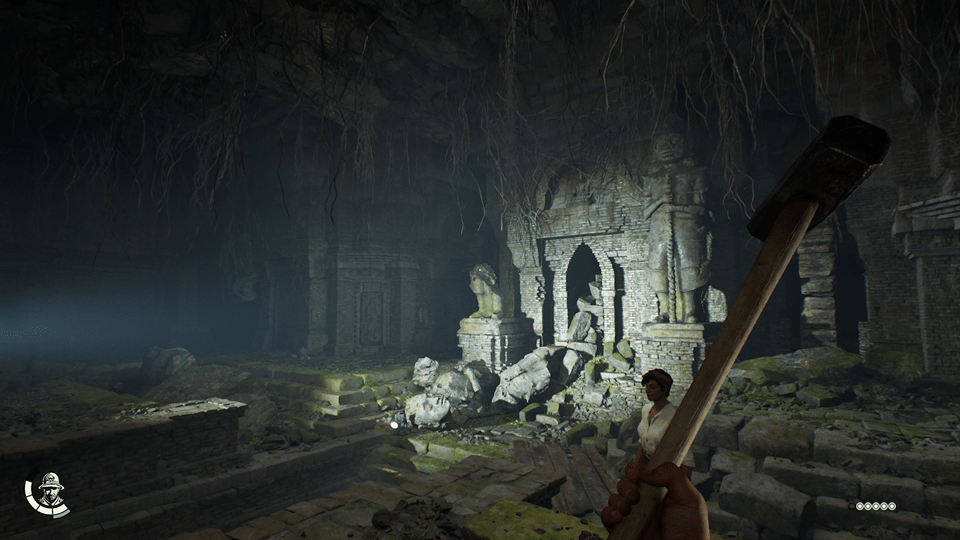
The main driver for that were the achievements, that you collect while playing the game. Some of them are automatic, as you progress through the story or side quests, other achievements are an expression of mastering the game, more complex to achieve or that require mastering a game mechanic (like fighting very well) – others just require a lot of patience, as you collect a lot of items across the game.
If you have never come across achievements: they’re a rewards and recognition system built into the game and or the gaming platform, to honor the completion of specific tasks, challenges or the game itself. They can be collected and often times, are published then on a gamer’s profile, so befriended gamers can see others’ progress – and start a competition. On XBox, they’re called “Achievements”, on Playstation, they talk about “Trophies”. Nintendo doesn’t seem to have a platform-wide system, but there’s a few games that have a similiar concept. The platform approach that Xbox and Playstation have also help track achievements across large player groups. You get a special sound and animation, when you complete a very rare achievement. And the platforms usually tell you, how rare an achievement is.
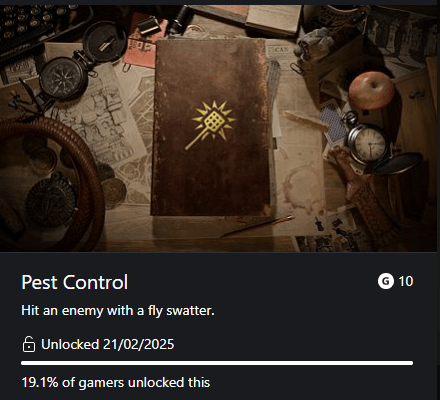
There’s achievements that you get for progressing in the game. In Indiana Jones and the Great Circle, there’s also achievements for smaller things – like beating your enemies with a fly swatter (the achievement is called “Pest Control”) or pushing an enemy off a ledge or cliff (“A little tumble”). Collecting a few more of them, after looking them up in a directory such as https://www.trueachievements.com/game/Indiana-Jones-and-the-Great-Circle/achievements brought me back to the game a while longer. While my attention wasn’t to collect all of them or everything in the game, I still wanted to try a few more things out and collect the relatively easier ones. And ultimately, discussions with friends about what they’ve achieved in their gameplay and comparing.
Certainly a newer development in modern game design, I thought. But that’s not the case. Achievements have quite a history!
If we leave aside the first achievements and trophies that were physical ones, that boy/girl scouts got when they achieved specific skills in real life as patches to sew onto their back packs and clothings, we can trace the first achievements back to the early 1980s. I never experienced this, but the first console my family owned, the Atari 2600, was the first console to get games from Activision, that supported achievements. It’s game like “Chopper Command”, “Dragster” and “Decathlon” that offered them: https://www.digitpress.com/archives/cc_patches_2600.htm. Back then, these achievements were still physical. You read the manual of the game, and in there, it told you what these achievements were and to take a photo of the TV if you achieved them, and send the photo back to Activision. In exchange, you received a physical patch from them. Some of these patches are shown here: https://archive.org/details/achievement-patches
The patches were iron-on and sew-on patches, that matched your achievement. They were made to display and brag about your achievement, for you and your friends to enjoy. There’s people collecting them: https://forums.atariage.com/topic/111301-ultimate-activision-patch-collection/ – very impressive! Badges made their way to other platforms too, eventually, also the C64.
A few games started implementing and tracking achievements locally, motivating players to continue to play the game. https://en.wikipedia.org/wiki/E-Motion is mentioned as one game that has achievements for players to unlock. They’re not synchronized someplace else.
The next incarnation of achievements happened on Microsoft’s MSN platform in the late 1990, when the internet took off. There were a few casual games that you could play, such as chess and backgammon and if you were successful, you would be issued a digital badge. It was tied to your MSN account, and online friends and connections could see them.
The original XBox that started in 2001/2002 didn’t carry forward this idea just yet, but with the XBox 360 in 2005 and its launch the online gaming platform XBox Live, achievements were established. As part of the XBox profile, achievements were kept as part of the “gamer score”. The achievements were treated as a strategic element for the XBox platform: it being tracked across the platform, as well as the programmatic approach for game developers to leverage this platform capability. The number of achievements any game offers varies – most games I’ve played offer between 25 and 50 achievements, most of them offering 1000 gamer score points. When you unlock an achievement, an XBox overlay over game is displayed, which a sound chime, notifying you about the new achievement – including some stat, if you unlocked a rare one or not. Other platforms have adopted it after.
It’s fascinating how conditioning the chime and the notification are. Since some achievements mark the end of a chapter or the overcoming a challenge, progressing in the story, I jumped up cheering a few times, when my game would break into a cut scene and I’d see the notification with the chime.
Why do these achievements exist? I think there’s a few reasons:
- For you to brag: if you completed a game or progressed in a game nicely, it’s only fair to brag about it, right? Now it’s tied to your XBox profile and you can prove it!
- To keep you in the game and make you replay it: what are the odds you continue to play a game when you finished it? Yeah – but aside of the side story, maybe you need an incentive of going back and complete some of the side quests?
- Discover more than the “essentials”: many games, and this is certainly true for Indiana Jones, create vast and detailed worlds for you to explore. Achievements may motivate you to explore these vast worlds, searching for artefacts, side quests, collectibles that, when found, unlock an achievement. It’s a way to immerse you deeper into the story, the setting, the world.
- Take on more challenges: Achievements offer a way of equipping a game with extra challenges of different complexity or difficulty levels for players to pick, without altering the overall game difficulty too much.
- Do something else for a moment: it offers gameplay variety. Need a break from the main story? Why not collect a few things over here and there, or complete this achievement, before going back and continuing the main story?
- Competition: you may want to compete with your friends and family for achievements in a specific game, or on gamer score across many games, to determine who is the better, more successful gamer (or who has more time on their hands to play).
Now I want my patches for my Indiana Jones and the Great Circle achievements!

 FRICKELSOFT