
Sony announce that they don’t want to publish any games for their in-market and future consoles after January 2028 anymore. All content for the consoles will then be delivery digitally. That’s an interesting move – and perhaps what most investors would describe as a dream come true. If you are the kind of person that picks up games from a physical electronics or a game store, this will end by then. The Playstation 6 (or whatever they call the next console), could be the last console with a disc drive. Or maybe it will ship without a disc drive – and Sony will charge extra for that, going forward.
The motivations are clear: if you are in control of all the possible ways of purchasing games for your console, then you don’t have to give electronic stores a cut or vendors a few percentages for them to sell the games. You can also bring down the production cost, if you don’t produce media and boxes any more. Currently, already 80% of the game purchases, according to Sony, are digital-only already. We could therefore argue that most players won’t care about that change, and the 20% of physical buyers will adjust, but there is more to this problem than Sony trying to save a few silver coins. The “impact” is entirely on players’ backs:
- Full control over price for games: If Sony are the only seller for a specific game for their platform they can control and dictate the price. When you hoped that you could get a discount from another vendor or from your favorite electronic store, as you buy a bundle or they have a promotion event, these times are over. Sony will be able to control the price for the time of the release, as well as the years after and you don’t have a choice of where to buy from.
- No more trading/exchanging games with friends – or selling them off: since you don’t have a choice where to buy from and you don’t have a physical copy of the game anymore, you can’t trade or exchange games with your friends. The times that you bought one game and your friend the other game, and you switched after you played them through, are over. If you didn’t particularly enjoy a specific game or you decide not to keep it you can’t just sell it off to the next person, there’s no secondary market. Everybody pays the full price: to Sony.
- You don’t own the game(s) any more, you buy a license: technically we’ve known this for a while, but this is the strict enforcement of the mantra of: you don’t own a game you simply purchase a license to play the game. Sony is doubling down on that notion and positioning themselves to enforce more and more control over how long and where you can play the game and turning the license mentality into a stricter reality.
- When the store vanishes, the game will be dead: when Sony decided to retire the online store for legacy or bespoke consoles, such as they did with the PS Vita into the PlayStation 3 store recently, your games will be gone, even if you have purchased a game but you currently do not have it on your physical console. There is a high chance that you no longer will be able to play the game, even if you bought it. Replaying your favorite games from time to time over two or three decades might become a challenge – and as disk space in consoles is also rarer (and more expensive than on PC), you need to come to the realization that every game has an expiry date and that you will be able to enjoy it only so long. Maybe so long, until someone decides to close the store to monetize the game another time through an emulator and a subscription with additional cost on a new console (yes, I am looking at you, Nintendo, too).
- No more “collecting”: If you collect games like myself that are near and dear to your heart, because you enjoyed the story, you enjoyed the game experience, and you want to have something physical on display to remind you of that experience: this is then no longer possible. You won’t be able to replay a game that you bought 20, 25 maybe even 30 or more years ago on the console that might even work, if Sony decide that the game and the console are too old even if you paid for it. You can start your Super Nintendo, your Atari and your Amiga today, put a game in and start it no problem – but you may not be able to do it in the newest tech that you buy 3 years from now. And digital collections don’t count the same way and don’t feel the same way. Even if it’s done well like for example how Steam does it.
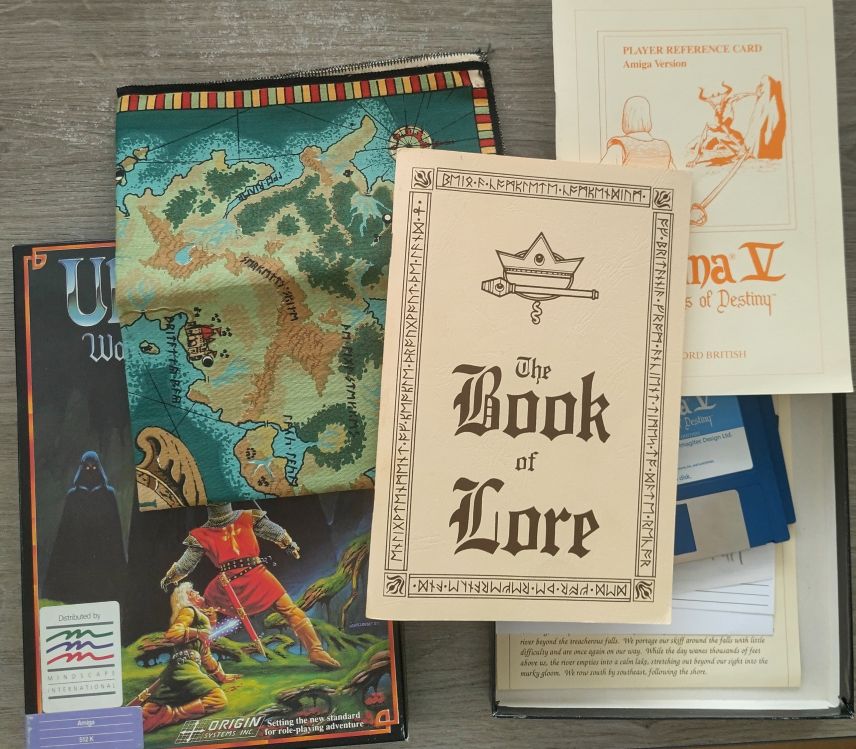
For the last point: we’ve seen this coming for quite a while. During the 80s and the 90s, publishers sold big boxes with the game media and a number of feelies, that accompanied the game (useful or not). In the early 2000’s the boxes and the feelies that were in the boxes became rarer and rarer, where we’re now seeing digital downloads for games mostly and even if you buy a physical game, there is little more in the box than just the medium or the cartridge that you plug into your PC or the console. Very seldomly there is a manual or a short description of how to start the game and how to get through a tutorial, let alone maps or other feelies that you could use to enjoy your game even further.
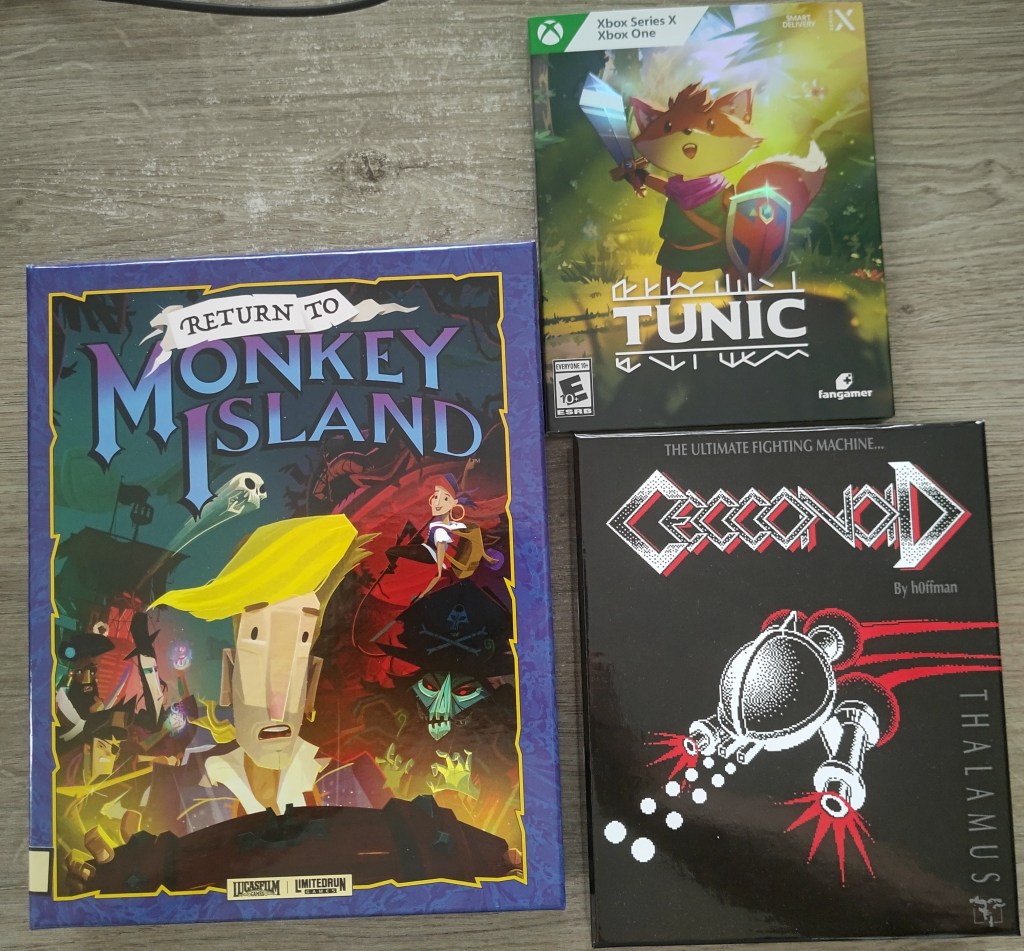
Short of specialized sites, such as Fangamer – Video game shirts, plushes, books, and more.or Limited Run Games, there are very few sites on the Internet that produce big box fanservice-focused editions of modern games that one can collect and put on display on a shelf.
Since I’m a retro game enthusiasts, I also want to mention that from a game preservation perspective Sony’s move is not only letting down gamers all over the world, but makes game preservation and compiling the history and the progression of games harder and harder. If games are only released with DRM in a physical form that’s locked down on a protected hardware, it will be incredibly difficult for future generations to understand and enjoy games from previous eras. Unless you find advanced tactics to capture a protected game from an also protected console, there is little chance that you can preserve the games properly. Especially if they are exclusive titles for digital-only consoles.
My sarcastic self is asking: what will be next, after this move has completed? Will the industry start to change the console business as well, stopping to sell console hardware but instead renting it out? I am sure they could make a decent amount of money, by forcing players to buy a game console subscription while staying in control of the hardware. If a new hardware revision was less vulnerable for jailbreaking than a previous version or they detect that your specific console is jailbroken, they could force you to send it back, suspend your subscription and access to your games until you do so, and send you a less breakable device as a replacement. I am sure they could find contractual ways of forcing you to send it back, by simply locking it out from online stores and making your playing experience miserable until you send it back for a “repaired” console.
At least you wouldn’t have to cough up the several hundreds of Euros for a new console up front – that subscription would bring the price down for a monthly fee – but you’d be stuck with that vendor even more than you were before.


