
In my playthrough of The Legend of Zelda: A Link To The Past, I realized how underappreciated the first 45 minutes of the game really are. You may call it tutorial, you may call it starting sequence that leads you into the game: it’s the beginning of the story, at which Link wakes up in his bed, his uncle departing with the sword in his hand. It’s a cold night with pouring rain that Link gets up, deciding to follow his uncle.
I’ll make the claim that what follows is one of the best tutorials I’ve seen in videogames from the era. Tutorials are part of the first time user experience (FTUE) that you want to provide in a game, to make sure new users transition well into your game, pick up the tone of the game, the controls, but also what the game is about and what type of game it is. It’s there to set the player up for success and have fun with your game, wtihout boring them to death from minute 1 on.
Good tutorials try to:
- Teach the player the minimum required skillset – to navigate the game and make first decisions and first actions to progress.
- Teaches these skills one after another, not overwhelming the player with too many controls, mechanics and story to memorize in any given time slice. This is to prevent too much cognitive load (Cognitive Load Theory – Wikipedia) and let the player progress slowly in this new game world. Not only teaches the mechanics, but also the tone and “mindset” required to succeed in the game.
- Show, don’t tell what the player should do: by meaningful examples, clues in the game world and directing the player through level design and item placement to the right places and right solutions for the first set of steps. No one wants to read walls of texts – but follow a natural direction the game gives you, and figure things out on your own.
- Start with small, clear objectives, and meaningful steps a player can follow, instead of opening up the big game world all at once. This allows for easier following and motivates to follow along.
- Leverage smaller objectives and steps to make successes and learned skills visible for the player, providing a positive feedback loop of what a player did well, directing them further to learn more and interact more with the game.
- Find balance between exploration and trying things freely through the player, and more linear passages, to guide players through necessary learnings.
- It is motivating and encouraging to continue play.
Based on that – there’s a number of things I believe Zelda A Link to the Past does very well. It starts off with essentially being the very beginning of the story, making this starting sequence a tutorial that well integrated into the main story. The game progresses after this first sequence along – no interruption, no break, no shift in locations. It’s well-embedded in the game and fits nicely story-wise and takes the player on this journey with Link.
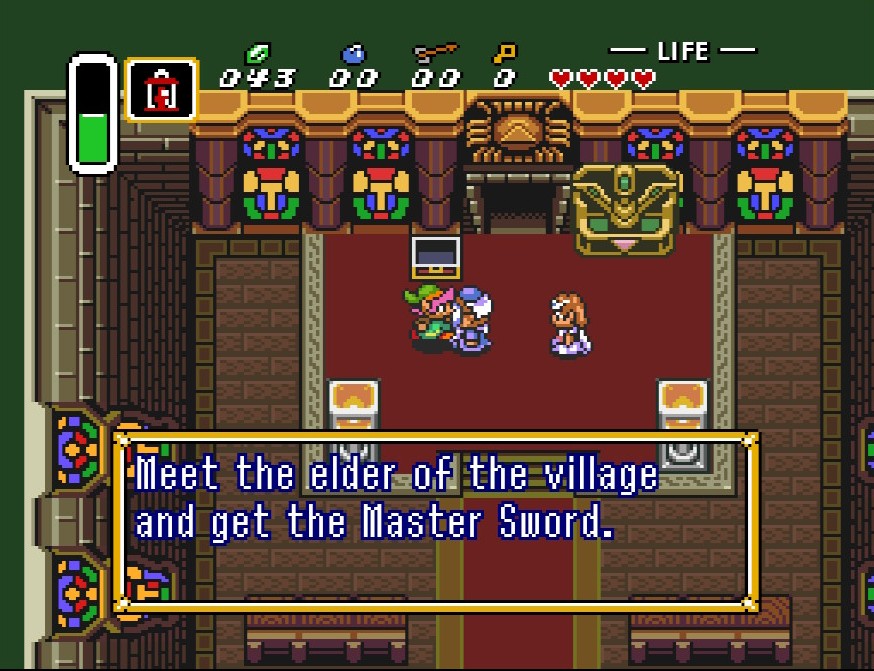
This first sequence, getting up, finding entry to the castle, going through the castle and saving Zelda, is a very small version of the rest of the game. You are battling enemies, you are finding treasures along the way, you are going to spend time in dungeons finding your way, supported by items you find in these dungeons, leveraging keys to unlock doors. At the same time, it’s well-structured with micro-goals of getting up, finding the castle first, then finding an entry to the castle (where you’re lead and guided by clues in the game world), finding your uncle and finally getting shield and sword to defend yourself. You are then tasked to find Zelda, in a more open sequence of exploring the dungeon, meeting your first enemies and defeating them, learning to navigate more open spaces and staying cautious. In this part, the player learns that there’s doors and stairs to climb, so dungeons can have multiple layers and multiple floors, shaping their mental model of the dungeon, and the game world, slowly but progressively. Having found Zelda, the next immediate task is to defeat the knight, learning the difference between keys and the boss key, and rescuing her. Next micro goal: throne room as per Zelda’s suggestion, and finding the way to the sanctuary. Once escaping the castle, in the darker passages, your goal is to make sure you survive, to bring Zelda into safety, where the game teaches you additional mechanics: more enemies, levers, using fire to light rooms. And that there can be darkness in the game world. All of this, piece by piece, passage by passage, stacking very few new ideas and mechanics on top of one another, making you succeed.
The starting sequence also is a very self-contained area, in the rain in the dark, where, despite the fact it feels like free exploration, the player can’t go off to far from the predetermined route to the castle and the secret entrance, making it a safe space to explore. It varies in “openness”, where in the beginning, finding the castle and the entrance feels very open, followed by a small linear sequence of finding uncle, some more openness looking for Zelda in the castle and exploring the castle – and finally a more linear passage in the basement under the castle to find the sanctuary. The varying openness and altering pace make the game feel rich and alive, allowing players to take pauses but also guide them in between free passages, allowing exploration but continuing to urge the player to make progress to find Zelda.
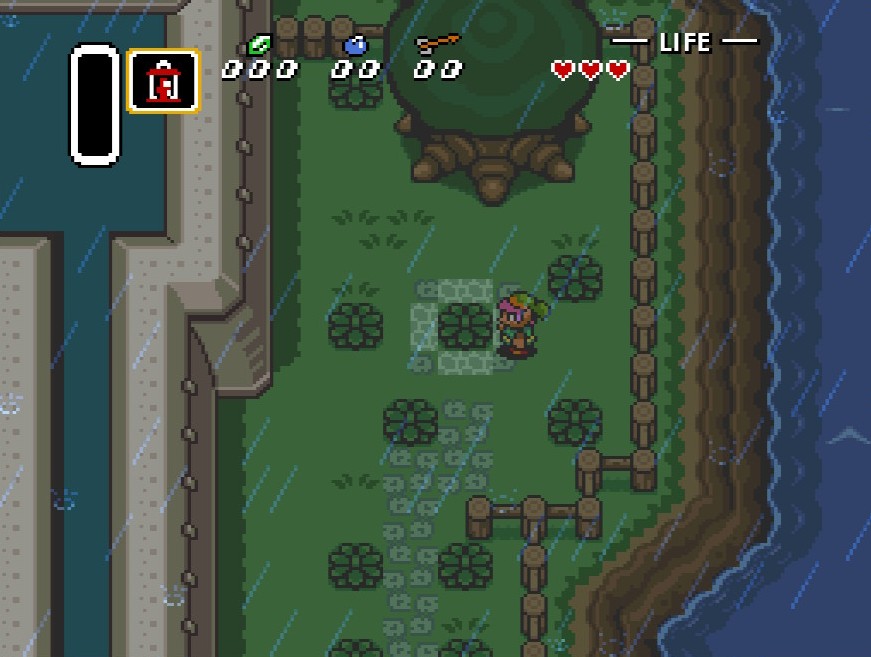
Even if you are in the castle and venture outside onto the upper level of the castle, all paths lead you back into the castle, bringing you back to a path to progress to Zelda.
There are extra areas in the castle, that allow for exploration, not bringing Link closer to Zelda. These area bring Link slightly off the path to Zelda, and seem to be designed to not look very attractive. In case the player goes that path, overcoming the enemies, a reward awaits them. Again, a nice design element to reward the player for venturing off the seemingly “better” path, jump over a few hurdles, and get rewarded. The rest of the game is rewarding this player behavior in a number of different ways later – and it’s manifested in the starting sequence in the castle as well. It’s the mindset that brings Link on the path of many side quests, heart containers and secrets in the open world.
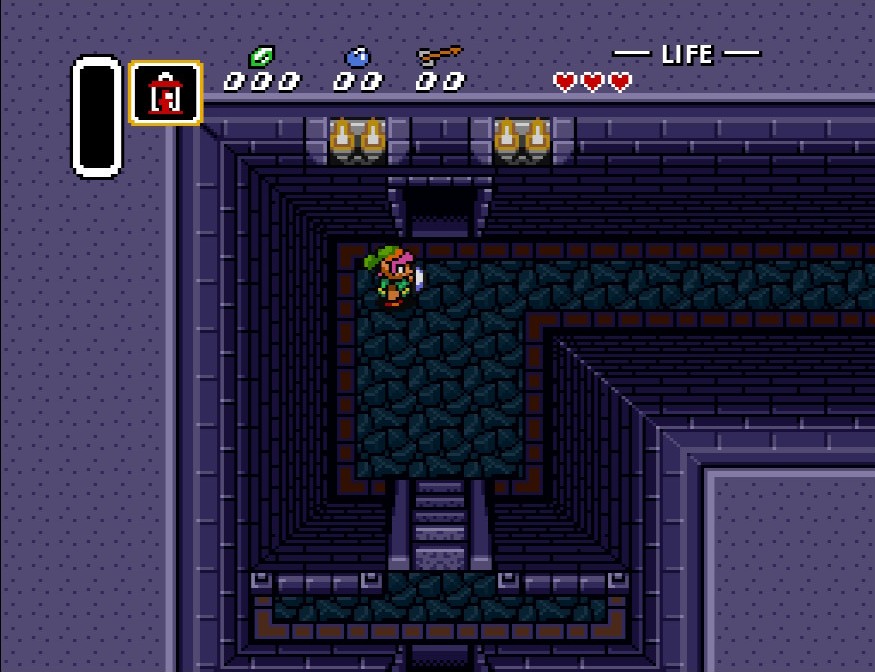
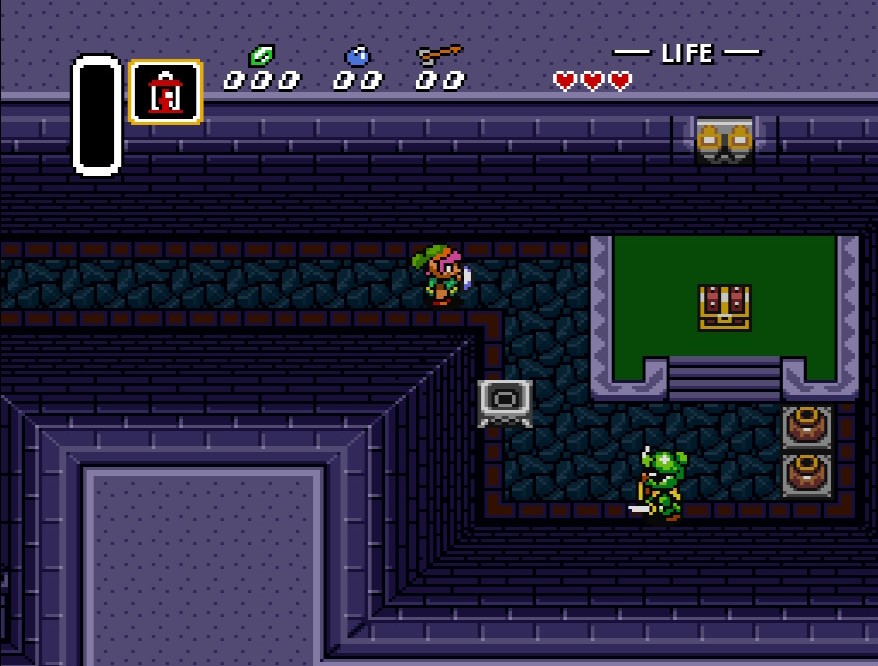
Dungeon-specific items are also introduced in the castle – before you find Zelda, you find the boomerang in a chest. You are taught to use it as a weapon, and a good enemy to test it on is the knight holding Zelda.
And you are taught that enemies can fall off cliffs…
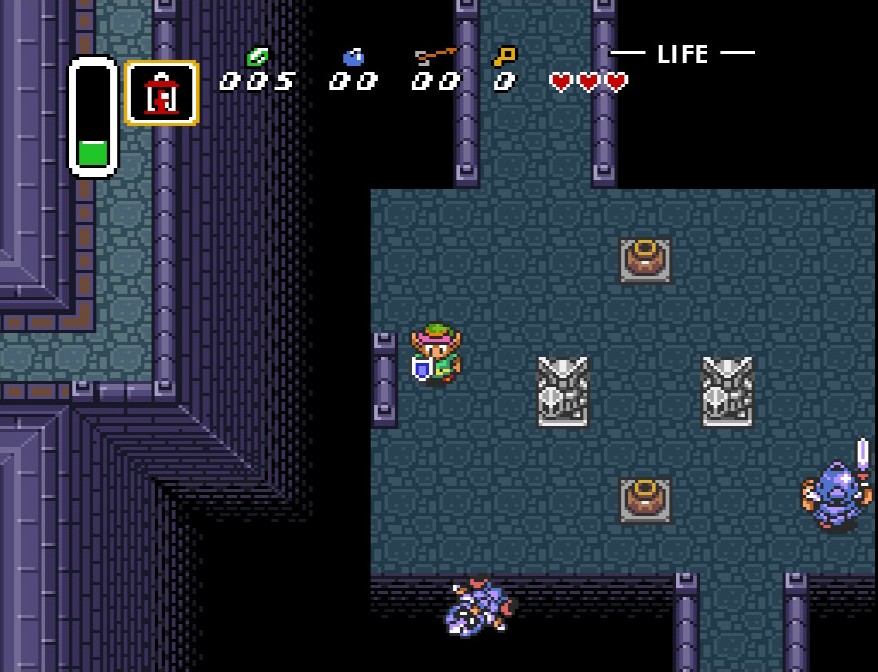
This again is a pattern introduced here, that players will take forward with them: dungeons may offer items, that are relevant for the story progression, open additional pathways blocked earlier, or may even be relevant for end bosses. You are required to switch weapons and change our items as you see challenges and problems, and you’re trained to look for the best item for a problem at hand. The concept of closed doors and keys, even boss keys are introduced here, and you are getting your first dungeon map, too. Both of these concepts are vital parts of the dungeon experience in this Zelda, and again, the castle softly, gently introduces these items here.
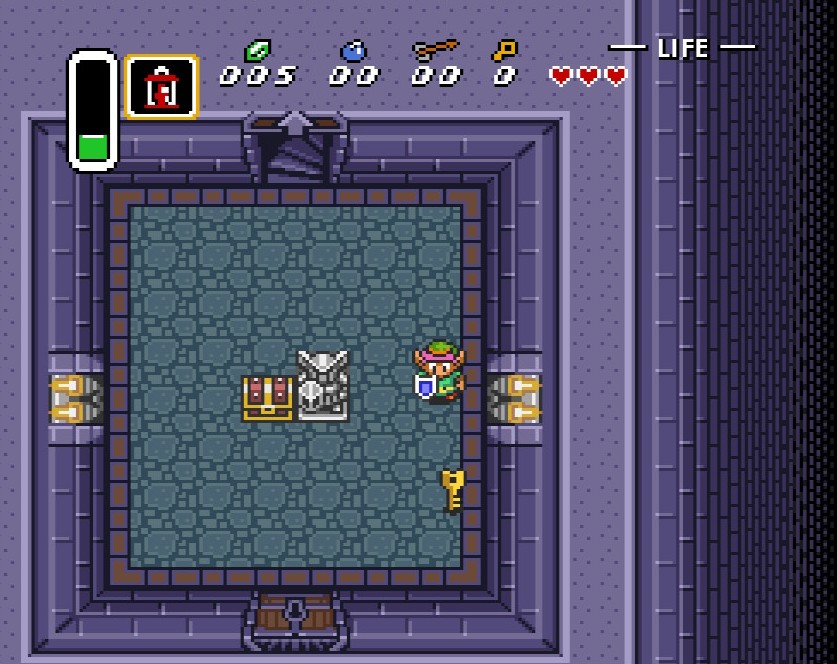
As you progress to find Zelda, you notice there’s no on-screen text guiding the player. All there is for text is dialog. Dialog with the uncle and dialog with Zelda. The rest is guidance through level design and hints and clues that the environment provides. The player does not have to stop and go through walls of explanations, or carry out specific tasks on specific objects, based on an instruction they read “just because”. The whole tutorial is based on common sense and clues that the environment offers. Other than dialog, there is no stopping the game experience, exploration and moving forward.
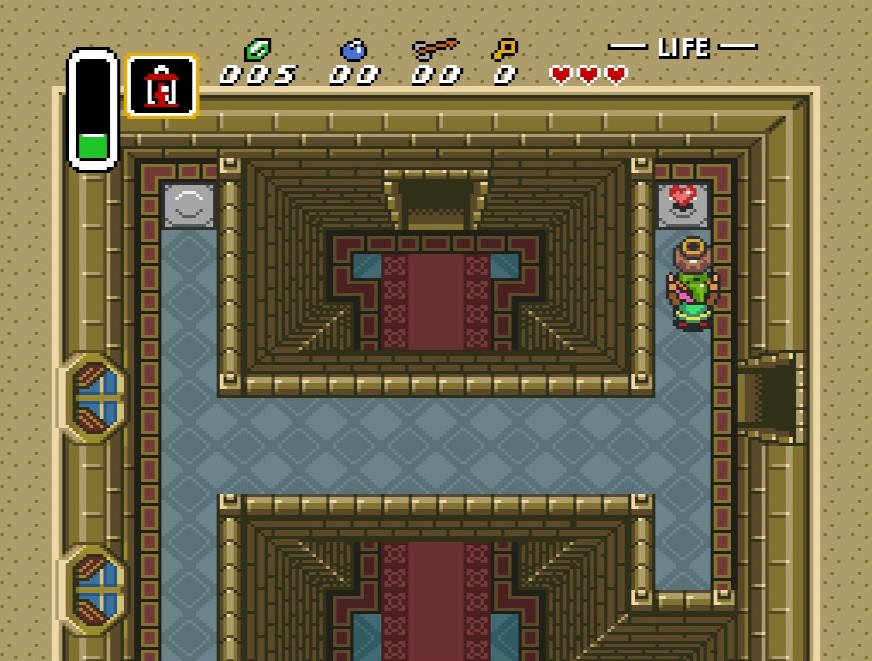
Of course, the castle is the starting point for the journey, and the enemies that Link meets aren’t the strongest, and won’t outnumber him immediately. The game is very generous with heart containers as loot from defeating soldiers and breaking pots. While Link may only have 3 available hearts in the beginning, the difficulty of the castle is staying manageable, allowing the player to refresh Link’s health regularly – encouraging the player to go on, and not demotivate them too much with too strong enemies and repeated deaths.
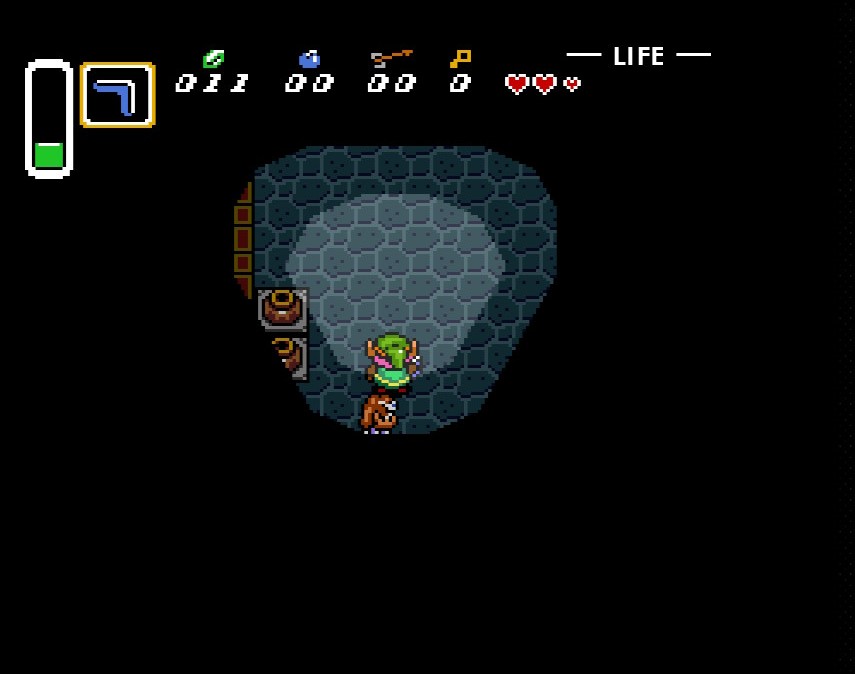
The dark area, leading Link and Zelda from the castle to the sanctuary, is a special one. As a player, I didn’t really like the area – it’s dark, it’s wet, there’s rats and snakes that I had not seen before. From a game design perspective – it’s well made. It supports the story well, fleeing the castle underground, and does so in a realistic tone in darkness and wetness, with underground animals. It teaches players that the game is working with darkness and that lamps offer a valid remediation. Lighting candles is later used as a mechanic to unlock secrets. The feeling this area generates, and the linear layout support the feeling of danger and urgency, driving the player to let Zelda and Link through the area into safety. It is an escape – and it feels that way. The cellar passage is very linear, has no areas to strive off, and limits the exploration – again, increasing the feeling of urgency and determination of bringing Zelda into safety.
As you reach the sanctuary, the game progresses – you leave Zelda with the priest, and you’re sent to Kakariko, to learn more about the imminent danger that Agahnim poses to Hyrule. There’s no cut in the story and there’s no switch in locations. Pace is coming down as Zelda is in safety, and you’re finally sent off into the open world to explore more. By now, you’ve learnt the basic mechanics and what to expect from the rest of the game.


One thought on “The well-made tutorial of Zelda: A Link to the past”